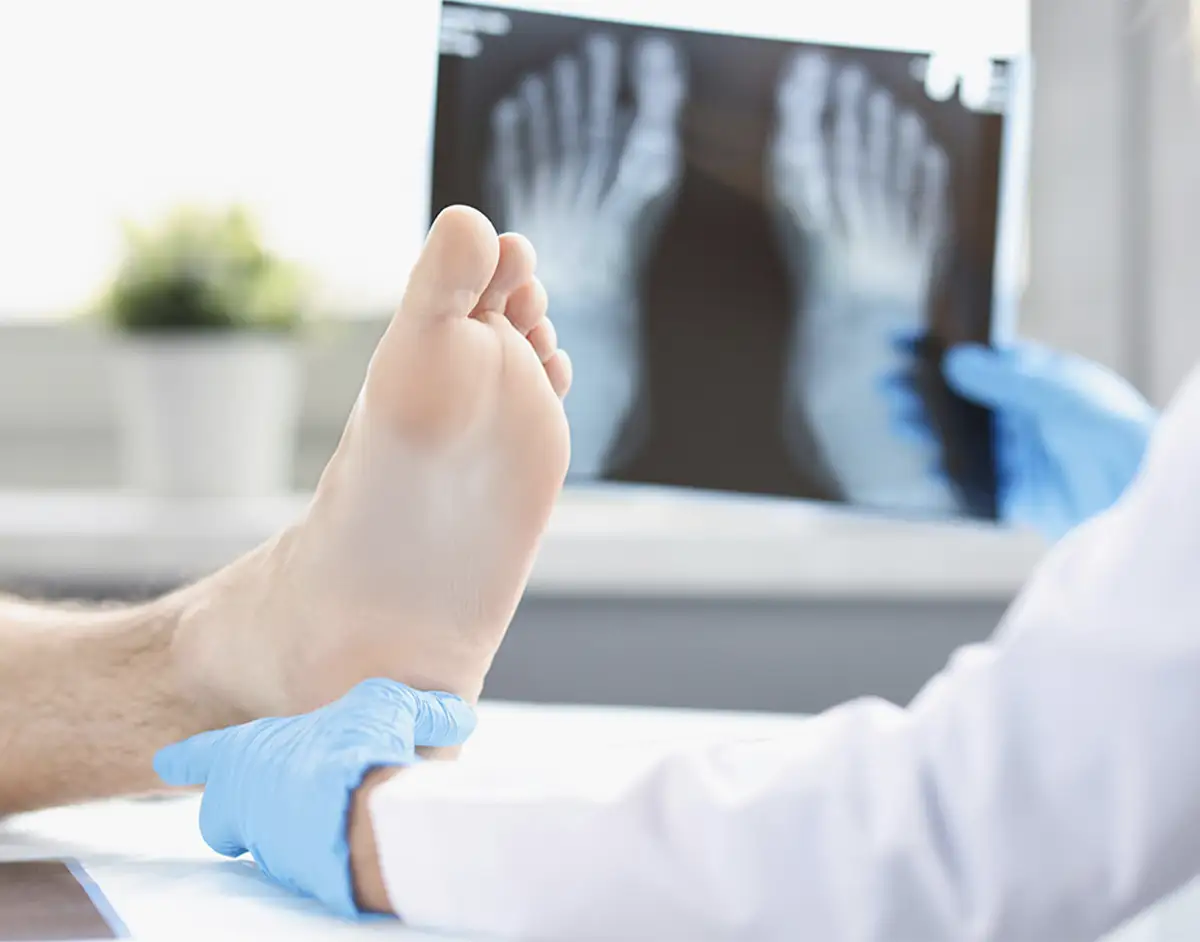
At OS Clinic, we use keyhole knee surgery to diagnose and treat knee problems with precision and minimal disruption to the joint. Your consultant will examine the knee carefully, explain what’s causing your symptoms and advise whether arthroscopy is the right next step for you.

QUICK LINKS
Keyhole knee surgery at a glance
- Minimally invasive knee surgery using small incisions
- Uses a camera to examine the inside of the joint
- Can diagnose and treat problems in the same procedure
- Often performed as a day case under general anaesthetic
- Recovery is usually quicker than open knee surgery
- Physiotherapy supports a safe return to activity
What is keyhole knee surgery?
Keyhole knee surgery, also called arthroscopy, is used to look inside the knee and treat specific problems through small incisions. It’s usually carried out under general anaesthetic, and most people go home the same day.
Your consultant may recommend arthroscopy to assess the knee in more detail or to carry out a targeted procedure at the same time.
Common uses include:
- Examination under anaesthetic – if your knee is too painful to examine fully when you’re awake, assessing it under anaesthetic allows your consultant to check movement, stability and any structural damage more accurately
- Manipulation under anaesthetic (MUA) – if stiffness hasn’t improved with physiotherapy, your consultant may gently move the knee while you’re asleep to improve movement. This can help break down scar tissue that’s limiting how far the knee bends or straightens
Keyhole surgery
Keyhole knee surgery may be considered if your symptoms haven’t improved with non-surgical treatment and the cause of your pain or stiffness needs clearer assessment.
It’s often used when:
- Your knee remains painful, stiff or swollen despite physiotherapy
- There’s a suspected structural problem inside the joint that needs confirmation
- Movement is restricted and affects daily activity
- Imaging has identified an issue that may be treated arthroscopically
For some people, surgery isn’t the first step. Many knee problems improve with rehabilitation, activity changes or targeted injections. Your consultant will explain your options clearly and help you decide what’s right for you.
Keyhole knee surgery is designed to treat specific problems inside the joint while limiting disruption to the surrounding tissues.
Potential benefits include:
- Smaller incisions, which usually means less pain after surgery
- Short hospital stay, with most people going home the same day
- Faster early recovery compared to open knee surgery
- A clear view inside the joint to support accurate diagnosis and treatment
- Ability to treat some conditions at the same time as diagnosis
- Structured rehabilitation to support a safe return to daily activity
Like any procedure, these benefits depend on the underlying problem and your overall health. Your consultant will explain what you can realistically expect based on your knee and your goals.
Your consultant will guide you through how to prepare for surgery so you know what to expect on the day and during early recovery.
Before your procedure:
- You’ll have a pre-operative assessment to check you’re fit for anaesthetic
- You may be asked to stop eating and drinking for a set period before surgery
- Arrange for someone to take you home, as you won’t be able to drive
- Plan a few days of lighter activity to allow your knee to settle after surgery
Keyhole knee surgery is carried out under general anaesthetic, so you’ll be asleep throughout. Most people go home the same day.
During arthroscopy, your consultant makes small incisions around the knee and inserts a fine camera called an arthroscope. This shows a clear image of the joint on a screen.
If you’re having treatment, surgical instruments are then passed through a second incision to treat the problem directly. This may include trimming damaged cartilage, smoothing joint surfaces or addressing a specific injury identified before or during the procedure.
The surgery is focused and controlled. The aim is to treat the cause of your symptoms while preserving as much healthy tissue as possible.
Recovery is usually steady, and early movement is encouraged to help restore function. Some discomfort is normal and can last for several weeks.
In the first few weeks:
- Rest your knee for the first 48 hours, then increase activity gradually
- Walking is usually possible within a day or two
- Driving can resume once you feel safe and in control
- Most people return to work after about a week, depending on their role
You’ll have a follow-up appointment around two weeks after surgery. Your consultant will review your progress and talk through any findings from the procedure. They will likely use images taken during surgery to explain what was found and treated.
All surgery carries some risk. Complications after keyhole knee surgery are uncommon, but it’s helpful to know which symptoms to watch for during recovery.
Possible risks include:
- Infection in the joint or wound
- Blood clots in the leg
- Ongoing pain or swelling
- Stiffness that may need further treatment
- Injury to cartilage or other structures inside the knee, though this is rare
The overall risk of a serious complication is low, often quoted as less than 1%. Your consultant will explain the risks in the context of your knee, your general health and the reason for surgery, so you can make an informed decision.
If your pain is severe, your knee becomes very swollen or hot, or you feel unwell after surgery, seek urgent medical attention.
At OS Clinic, your care is led by experienced consultant orthopaedic surgeons who focus on careful diagnosis and clear decision-making. Orthopaedic surgeons are doctors who specialise in bones, joints, muscles and ligaments.
You can expect:
- A thorough assessment to understand what’s causing your symptoms
- Clear, honest advice on surgical and non-surgical options
- Surgery performed by a consultant who specialises in knee conditions
- Coordinated care, including imaging and physiotherapy when needed
- Follow-up that tracks your recovery and supports your return to activity
Our focus is on helping you move forward with confidence, with a plan that fits your knee and your goals.
If knee pain, stiffness or swelling is affecting how you move, a specialist assessment can help to understand the cause and your next steps.
At OS Clinic, you’ll be seen by a consultant orthopaedic surgeon who will examine your knee, explain your options clearly and advise if keyhole surgery is appropriate for you.