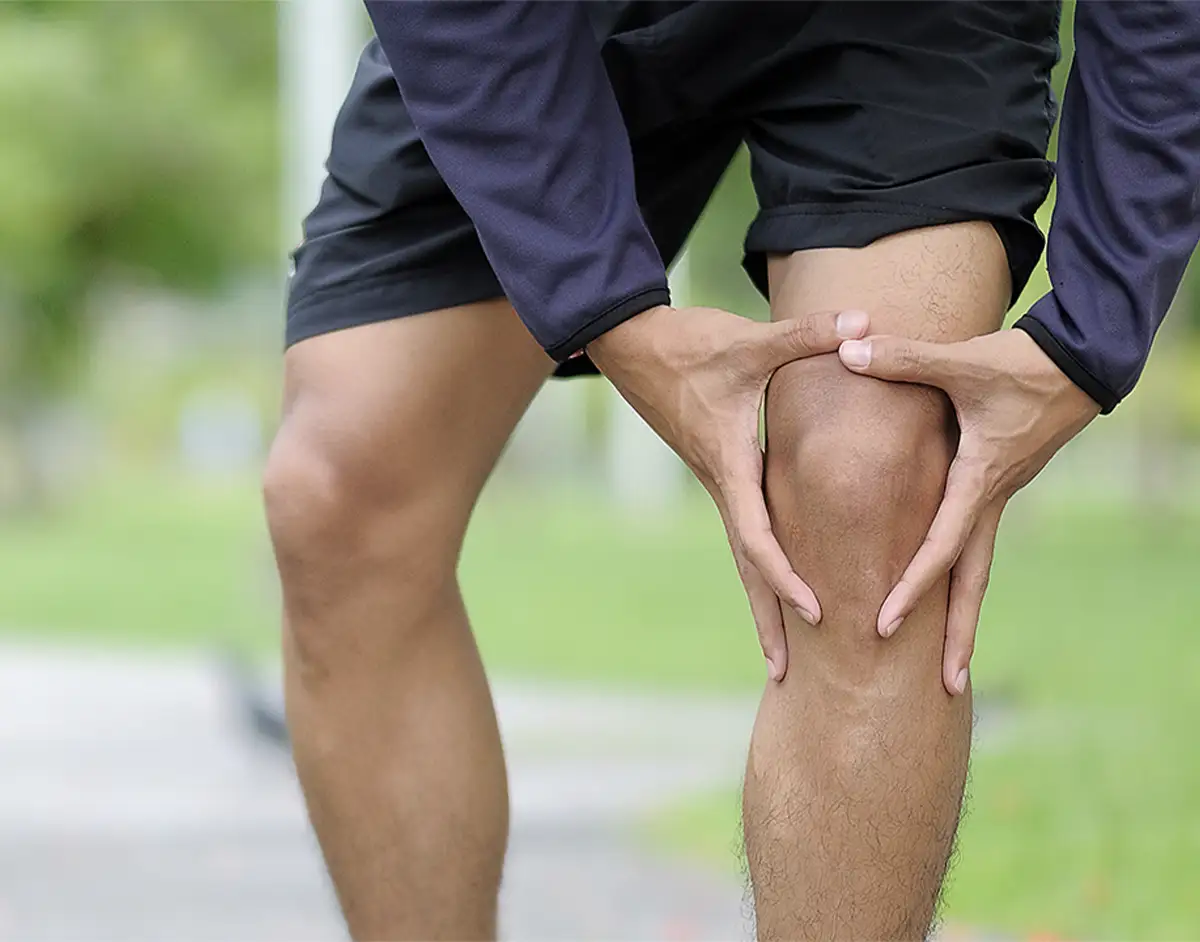
Knee injuries: when to wait, when to get assessed and what happens next
A sudden twist, a ‘pop’ or swelling that appears overnight can leave you wondering whether to wait it out or seek help. While many knee injuries improve with simple measures, others need early assessment to avoid ongoing pain or instability.
This article, based on insights from Mr Raghbir Khakha, consultant knee surgeon at OS Clinic, explains what may be happening inside the knee, how we investigate problems and what treatment looks like.
What’s happening when your knee hurts?
The knee is supported by four main ligaments, two shock absorbers (the menisci), strong thigh and calf muscles and a smooth cartilage lining. When one structure is injured, swelling, stiffness and loss of confidence often follow.
Knee sprains
A knee sprain occurs when the soft tissues are overstretched during a sudden twist or awkward landing. Symptoms include swelling, stiffness and discomfort with weight bearing. Most improve with rest, ice, compression, elevation and early physiotherapy.
‘If the knee swells within 24 hours, that usually tells us something inside has been injured.’
— Mr Raghbir Khakha
Swelling that develops quickly often reflects bleeding inside the joint. Mr Khakha advises seeking assessment if swelling appears early, if pain worsens after 48–72 hours, or if the knee simply ‘doesn’t feel right’.
Ligament injuries (including ACL)
Anterior cruciate ligament (ACL) injuries often follow a planted foot, a twist inward and a sudden ‘pop’, with swelling developing quickly.
Meniscus injuries
These occur during twisting or squatting movements and can lead to sharp joint-line pain, clicking or locking.
Early arthritis in active adults
Previous injuries, subtle alignment differences (bow legs or knock knees) or overload can trigger early wear and lead to arthritis. Joint preservation focuses on strength, alignment, inflammation and load management.
Functional instability
Even when pain settles, some people lose trust in the knee. Weakness, partial ligament injury or meniscus problems may contribute.
Symptoms and when to seek help
You can often wait and monitor for 24–48 hours if the following apply:
- There is no significant swelling
- You can bear weight
- Symptoms are improving with rest, ice and elevation
- The knee does not feel as if it will give way
When to seek immediate medical care
Seek urgent medical care when any of the following are present:
- Sudden severe pain
- Fever with a hot, swollen joint
- Unexplained or rapidly increasing swelling
- Inability to bear weight
- Loss of function
- New numbness or tingling
- Chest pain or breathlessness after surgery
How we assess knee injuries or pain at OS Clinic
Assessment always begins with the story of how your symptoms started. A twist during sport, a sudden loss of confidence in the knee or swelling that arrives overnight can point us towards the structures that may be involved.
Mr Raghbir Khakha emphasises that listening carefully often provides the clearest early clues.
‘Most diagnoses start with listening. The story tells us most of what we need to know.’
— Mr Raghbir Khakha
After understanding what happened, your consultant examines the knee in a focused, gentle way. This includes checking the main stabilising ligaments, looking for signs of meniscus irritation, assessing how far the knee bends and straightens and watching how you walk. Small details – such as where the discomfort sits or whether the knee hesitates during movement – help refine the picture.
Imaging is used thoughtfully. An X-ray may be recommended if putting weight through the leg is difficult or a fracture needs ruling out. MRI is arranged when it will meaningfully shape your treatment plan. The aim is not to scan everyone, but to gather the right information to guide the next steps.
Non-surgical treatment options
Many knee injuries settle with simple measures. Rest, ice, compression and elevation can help during the first few days. Anti-inflammatory medication may reduce pain for some people, although it’s not suitable for everyone.
Physiotherapy is often central to recovery because improving strength and control around the hip and knee supports the joint as healing progresses. Short-term use of crutches can also help reduce load while symptoms calm down.
A feeling of instability is common after an injury. This usually improves with rehabilitation that focuses on strengthening and coordination. The aim is to help the muscles around the knee work together so the joint feels more secure during day-to-day activity.
ACL-related problems
Not all ACL injuries require surgery. A number of people regain stability through structured rehabilitation. In some early cases, a period of bracing may support the healing process.
If the knee continues to feel unreliable despite good rehabilitation, especially during routine movements, ACL reconstruction may be recommended.
Meniscus-related problems
The meniscus can be irritated or torn during twisting or squatting movements. Many mild injuries settle with physiotherapy. When the knee locks, catches or produces ongoing mechanical symptoms, a keyhole procedure may be advised to repair or trim the damaged tissue.
Early arthritis
When early arthritis is present, treatment focuses on preserving the joint for as long as possible. Strength work, gait correction and weight optimisation all help reduce load on the joint.
Inflammation can be managed through medication when appropriate, supported by strategies such as insoles or targeted exercise. Image-guided injections, including Arthrosamid, steroid, PRP or BMAC, may provide relief for selected patients when symptoms flare or limit activity.
Risks and possible complications
All treatments carry some degree of risk, even when the plan is mostly rehabilitation.
Some people continue to experience discomfort or stiffness for a period of time, particularly if the knee was very swollen at the start. Others may notice that the knee feels less stable during certain movements or that symptoms flare when activity increases too quickly. Re-injury is also possible, especially when returning to sport.
Surgical treatments have their own risks, although these are generally uncommon. Infection can occur after any operation, and blood clots are rare but important to be aware of. Your consultant will explain the potential risks that relate to your particular injury, as well as the steps taken to reduce them.
Recovery and typical milestones
Recovery varies depending on the structure that has been injured and whether surgery is needed.
Minor sprains often settle within two to six weeks, especially with early movement and physiotherapy. Irritation of the meniscus can take a little longer, and many people start to feel more confident around the six to twelve week mark once strength and balance improve.
For those who undergo ACL reconstruction, recovery follows a longer, phased pathway. The first week is usually about rest, controlling swelling and starting gentle movements. A wound review takes place at around two weeks.
Most people are walking without crutches between the second and fourth week. Running usually begins at about three months, although this depends on strength and control, and return to sport tends to be closer to the nine-month point. These milestones may vary, and your consultant can confirm the expectations that best match your situation.
When cartilage repair is performed at the same time as ligament surgery, the early period is more protected. Weight bearing may be limited to give the repair the best chance to heal.
Book a consultation with our knee team
If you’re worried about knee pain, instability or a recent injury, you can book a consultation with our knee team at OS Clinic.
Prefer to speak first? Call +44 (0)20 7046 8000 to reach our patient liaison team.
FAQs
1. Why did my knee swell so quickly?
Swelling within 24 hours usually means bleeding inside the joint from a ligament or meniscus injury.
2. Do all ACL tears need surgery?
No. Many recover with rehabilitation alone. Surgery is for those who remain unstable.
3. How do I know I need an MRI?
Your consultant examines the knee first. MRI is arranged when it will change your plan.
4. Can a meniscus tear heal on its own?
Some can. Locking or mechanical symptoms are more likely to require surgery.
5. Why does my knee feel like it might buckle?
Instability may come from ligament injury, meniscus problems or weakness around the knee.
Disclaimer
This article is for general information only and is not a substitute for professional medical advice. If you have sudden or severe pain, cannot bear weight or have a fever with a hot, swollen joint, seek urgent medical attention.
Reviewer: Mr Raghbir Khakha, specialist trauma and orthopaedic knee surgeon
Last reviewed: [18 December 2025]